

In honor of Li Chun, the Chinese qi node associated with the solar new year, I’ve written this special article about Chinese classical view in practice as Chinese medicine as well as Chinese Polestar astrology. Happy new year…sort of: because Lunar New Year will be February 17, 2026 and you can join us in person or online. Info to Join Us for the Yang Fire Horse Celebration HERE.
Chinese Medicine, Chinese Polestar Astrology, and Why View Matters
“The sage aligns with Heaven and models himself after Earth,
thus nourishing life and protecting what has been received from the ancestors.”
-Liji, “Liyun” chapter
Recently in our private student group, a great question came up. A student had encountered a course combining Chinese cosmology with Western astrology and Jungian psychology and felt unsure how to orient herself. Her question was not critical or dismissive, but about discernment: are these systems actually saying the same thing, or are they operating from different views? Why does it feel so different from what we are doing here with Polestar astrology and Chinese medicine?
That question gets to something fundamental: View. Not just “how we interpret things,” but the underlying operating framework that guides a tradition. View determines the orientation of a system, what it is for, how it understands the human being, how it is meant to be practiced.
Without clarity on View, we might take a thousand-year-old body of wisdom and unknowingly reshape it to match whatever modern ideas feel familiar to us, even if those ideas come from thoughtful places like psychology or Jungian work.
Polestar Astrology (Zi Wei Dou Shu) Is Not Psychologized
“Good fortune and misfortune are the results of movement
in accord with or against the proper time.”
-Zhouyi, Xici Zhuan I.5
Polestar astrology is not a psychological system. That’s not a critique of psychology, but a clarification of function and intent. Polestar astrology is not primarily concerned with personality analysis or individuation, inner conflict, trauma resolution, or mapping inner archetypes.
Polestar astrology is embedded in the classical Chinese cosmological view. This view is fundamentally different from post-Enlightenment Western frameworks that seek to explain behavior, predict outcomes, or fix pathology. In Polestar astrology, we’re not analyzing the self; we’re locating ourselves within the cyclical, relational, and rhythmic flows of Heaven, Earth, and Humanity. Time, fate, and seasonal rhythm are not metaphors. They are actual forces. The system is deeply relational and observational. This is a view of fate that emphasizes discernment and timing, not internal diagnosis or identity.
This doesn’t mean it can’t feel personal. It can be wildly intimate. However, that intimacy comes from resonance with the larger order, not from dissecting the psyche.
Classical Chinese Medicine Emerges from the Same View
“When Heaven and Earth are at peace, the myriad beings flourish.
When yin and yang lose their harmony, the hundred illnesses arise.”
-Huangdi Neijing Suwen 5
Classical Chinese medicine arises from this same cosmological root as Polestar astrology. Our Chinese medical texts--the Suwen, Lingshu, and Nanjing—indicate no split between mind and body. There is no post-Cartesian divide. There is no need to re-integrate because there was never a division.
The Suwen and Lingshu do not describe the psyche as a separate category. The classical medical texts describe human physiology, emotion, and consciousness as continuous expressions of yin and yang, qi movement, and seasonal change, among others.
Organs are not merely mechanical structures. They are relational centers that connect the human being to the rhythms of Heaven and Earth. The Heart governs the spirit. The Liver governs the planning and directional aspect of the mind. The Lung governs the corporeal soul and our interface with the world. These are not metaphors layered onto anatomy. Our organs are not mechanical; they are spiritual, affective, temporal. They are portals of relationship between our body and the wider cosmos.
To treat disease classically is to re-establish this relationship. It is not only to reduce symptoms, though that certainly happens. This helps the body re-enter into a harmonic cycle with nature. Humans are cosmological beings. We are never outside the world we’re treating, but are participants in its cycles.
We restore harmony using acupuncture, herbs, moxibustion, daoyin, and seasonal practices, possibly including sleep practices, movement, and personal cultivation practices.
There is room in the system to address physical symptoms, emotional suffering, and existential uncertainty, because the framework does not separate these categories.
Psychology Is Valuable, But It Is Not the Same
Modern psychology, especially clinical psychology, is incredibly valuable. It has clear and meaningful goals. Broadly speaking, it aims to describe and explain mental processes and behavior, to reduce psychological suffering, and to restore functional capacity, increasing adaptability. These are important aims, and psychological support can be life-changing for many people.
But those aims differ from the goals of Chinese cosmological systems.
Psychology asks, what happened to you? How does it shape your inner life and behavior?
Polestar astrology asks, where are you in the cycle of time? What is the nature of this period of your fate? Where is your fate open wide for your freedom to express? Where can you use your fate to engage your freedom? (They come together.)
Classical Chinese medicine asks, how does your body express its resonance or dissonance with Heaven and Earth? What is out of tune? How do we restore that resonance?
Classical Chinese medical models and polestar astrology share a Chinese cosmological view born in the Han, and shaped through the Tang-Song period and beyond. The view of Western astrology and psychology are not the same. These are simply different approaches that suit different purposes.
These systems can coexist and used alongside one another, when done carefully, but they are not the same.
When we try to force one system into the shape of another, we risk diluting both.
Why This Matters: View Is an Ethical Concern
Where we believe we are neutral, we often carry unexamined assumptions shaped by culture, not by choice. Training View is not just an intellectual exercise. It is an ethical concern. A practitioner’s view shapes how they listen, what they notice, how they speak, what they offer, and what they leave out. The objective is not dogmatic adherence to a specific set of ideals, but conscious sharpening of discernment. (In fact, View should actually protect one from dogmatism.) So, a practitioner’s view is not just theoretical.
If we don’t consciously examine our View, then we default to one, one that is inherited. Usually, that default comes from the culture and family we were raised in. That culture is, for many of us, full of quiet assumptions: the body is mechanical, the mind is separate from body, nature is inert, time is linear, suffering is pathological, astrology is psychological, healing is fixing.
The classical Chinese view is different. It says that the mind and body are not separate. It says time is cyclical, not linear. Nature is alive and rhythmic, not inert. Suffering is not inherently a problem: it might be part of a meaningful pattern.
Healing is a return to harmony, not a fix. That human beings are embedded in a living, responsive cosmos. That nature is not metaphor. That experience is not pathology. That fate is not punishment.
Training on View actually helps to reveal our cultural and familial assumptions. It exposes our default beliefs and when we do so, we are free to opt consciously into them or adopt something more in alignment with Nature itself.
The classical Chinese cosmological View is not just a set of beliefs. They are orientations based on cosmological observations which are embedded in a classical approach to Chinese medicine and Polestar astrology. They are worth preserving, not because it’s ancient, but because it’s still alive, and livable.
These systems are not theoretical models or symbolic metaphors. They are practices. We can live them, test them, and observe their veracity ourselves directly.
On Discernment and Ethics in Practice
There are many courses and systems available today that attempt to integrate Chinese cosmology with Western psychological tools. Some may be thoughtful and effective. But as practitioners, we must ask: what is the view? What is the framework being used?
Chinese polestar astrology offers a rigorous method for understanding personal fate and cyclical timing.
Chinese medicine, when practiced classically, offers embodied, seasonal, and cosmological tools for harmonization and healing. They are overlapping, but distinct, and share a common View.
These systems can be used with or without each other. When combined, their power lies in their shared root: a worldview where time is not clock-time, nature is not scenery, and fate is not a prison. It is a rhythm. A pattern. A call and response between the individual and the cosmos.
That’s the root we’re returning to.
Closing Note
This post may be the first of two. A follow-up may explore the ethical implications of Polestar astrology more directly. But for now, the point remains: clarity of view matters. Because how we see shapes what we do.
Let’s not collapse Chinese systems into Western models. Let’s understand each on its own terms.
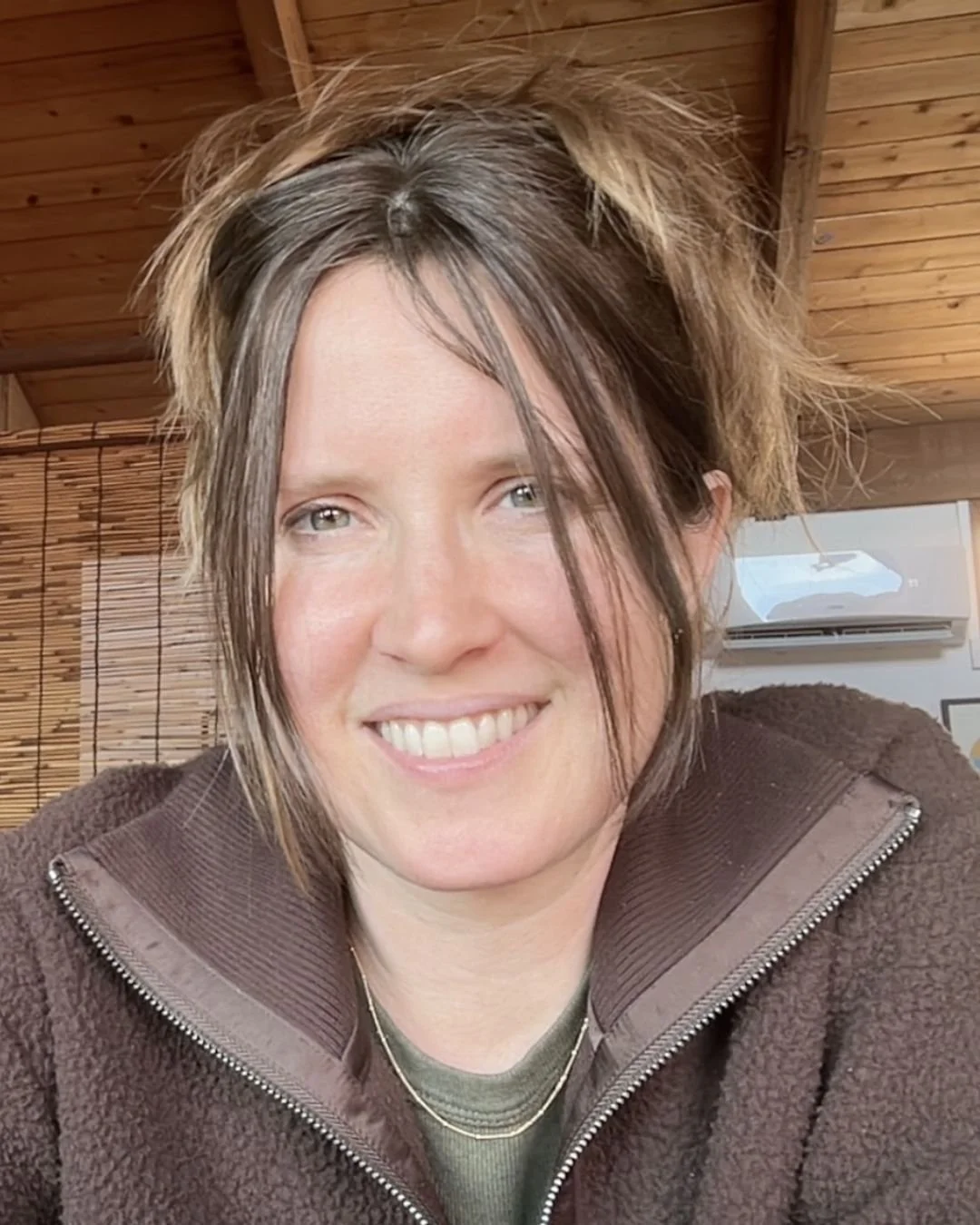
Anne Shelton Crute, LAc, DAOM is the founder of Ritual Health Acupuncture & Herbalism in Berkeley, California. A Doctor of Acupuncture and Oriental Medicine, she has been in clinical practice for over fifteen years, specializing in classical Chinese medicine with a focus on chronic illness, nervous system regulation, and life transitions.
Her approach draws from more than two decades of study in Chinese medicine, Chinese Polestar astrology, Ayurveda, and Tibetan herbalism through private apprenticeship in the U.S., Japan, and India. She is a published author and educator, with a chapter in A Ring Without End: Reflections on Classical Chinese Medicine Mind/Body Mapping, and serves as an editor on various Chinese medicine and astrology texts, including Liu Ming’s forthcoming book on Polestar astrology. She teaches in doctoral programs alongside Z’ev Rosenberg. Anne began studying Polestar astrology with Liu Ming in 2003 and now offers readings rooted in cosmological timing and classical Chinese View. She is available for Chinese Polestar Astrology readings online and acupuncture treatments in clinic in Berkeley, CA.